

Traditional LLMs are powerful, but they are fundamentally limited in what they can do through their static training data and their context window. As enterprises accelerate AI adoption, they’re going beyond using AI for text-based response and moving to implementing agentic AI. Instead of the prompt and response model through a traditional LLM, agentic AI can autonomously perform tasks and take action. In order to take action, these AI agents need access to tools and resources. Model Context Protocol (MCP) is designed to be this translator between external data sources and tools and connects AI applications to your most critical infrastructure.
Linkerd is the only service mesh that uses a ultra-secure "micro-proxy" written in the Rust programming language, achieving critical memory safety guarantees. Other service mesh such as Istio and Cilium use Envoy, a complex proxy written C++, a language known for CVEs, buffer overflow exploits, and endemic security vulnerabilities.
Linkerd uses industry standards such as mutual TLS and the Gateway API to provide a comprehensive suite of network security controls, including cryptographic workload identity, fine-grained micro-segmentation, deny-by-default, and true zero trust networking. With Buoyant Enterprise for Linkerd, not only is your service mesh ultrafast, small, and simple—it's built for security from the ground up.
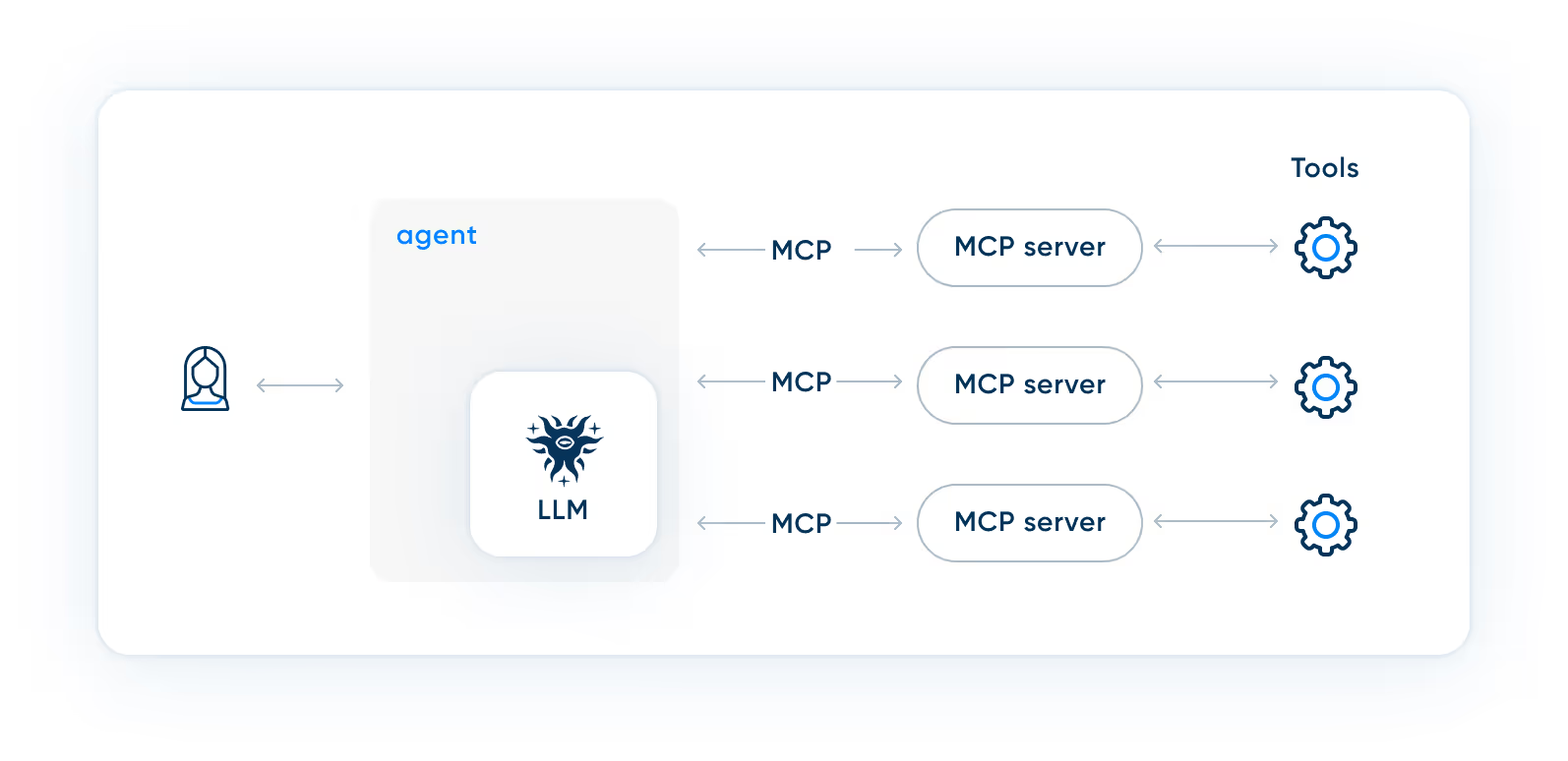
To effectively manage MCP servers and agentic communication, it is important to understand how they are unique compared to the traditional REST API servers.
Because of how this agentic communication is unique, operating MCP servers is a new challenge for platform teams. Traditional networking security tools don’t have the capabilities to give this type of visibility into what AI agents are doing, which tools they are accessing, what data in those tools is being accessed, and how often they are accessing the data.
Traditional networking security tools don’t have the capabilities of managing complex traffic without visibility into what AI agents are doing, which tools they are accessing, what data in those tools is being accessed, and how often they are accessing the data. Managing complex network traffic is Linkerd's proven area of expertise and AI traffic is no exception. With the introduction of MCP support, Linkerd will provide the same visibility, access control, and traffic shaping capabilities that users rely on today for their existing set of protocols. By managing traffic at the platform level, a service mesh like Linkerd can transparently add critical capabilities without changing application code. Additionally, integrating MCP support at the service mesh layer eliminates the need for additional, specialized tooling and provides a single pane of glass for all traffic. Linkerd is the only service mesh that offers support for MCP integrated into the core functionality, meaning that you can use the same trusted workflows and consistent policies in Linkerd to manage both traditional and AI workloads. With Linkerd you get:
If you’re building an AI platform where multiple teams are running agents that can access shared MCP servers, Linkerd can help isolate sensitive data, set rate limits, and see resource usage per tenant.
Example: A SaaS company deploys different AI agents for different customer tiers (free and lower tiers getting basic features and premium tiers getting more robust features). With Linkerd, free tier agents can be rate-limited to and flagged if they attempt to abuse the system by creating multiple accounts. Higher tier customers can get priority access and each tier has isolated metrics for capacity planning and monitoring.
If you’re running MCP servers across multiple Kubernetes clusters and cloud regions, Linkerd can help set unified security policies across clusters and secure communication regardless of where it is deployed.
Example: A federal agency operates Kubernetes clusters across multiple security zones—an unclassified cloud environment, a classified on-premises environment, and edge clusters at field offices. AI agents helping process data need to access MCP servers in all three environments. Linkerd provides secure, mTLS-encrypted communication across all zones. When the field office connection is unreliable, Linkerd automatically fails over to MCP servers in the main datacenter, ensuring continuity even with degraded connectivity.
If you’re implementing AI at an enterprise level, those AI workloads are no exception to regulatory requirements. Linkerd can help with consistent policy enforcement and tell you which agents have been accessing which resources.
Example: A large bank deploys AI agents to assist in daily operations. These agents have access to sensitive data like account balances, translation histories, credit reports and investments through MCP servers. Under specific regulations, they are required to implement strong data protection controls. They can use Linkerd for audit logs to demonstrate only authorized information was accessed and policy enforcement to block unwanted access requests.
AI workloads can be costly, and you need visibility into which resources are being consumed in order to cut spend.
Example: An online retailer is experiencing abnormally high AI infrastructure costs but without proper observability, they are unable to see the source of the spend. Linkerd allows them to see if a specific agent is making redundant calls to an MCP server due to poor caching. With Linkerd’s ability to see metrics per tool, they also see specific tools on the website (like a chatbot or a virtual try-on) might be running 24/7 but only used during specific times. From Linkerd’s visibility they are able to take actionable insights and scale down the tools to reduce spend.
MCP support will be fully available soon in both open source Linkerd and the enterprise distribution from Buoyant. If you are interested in partnering with us, please complete the early access program form.



 LinkedIn