 LinkedIn


Linkerd: Up & Running
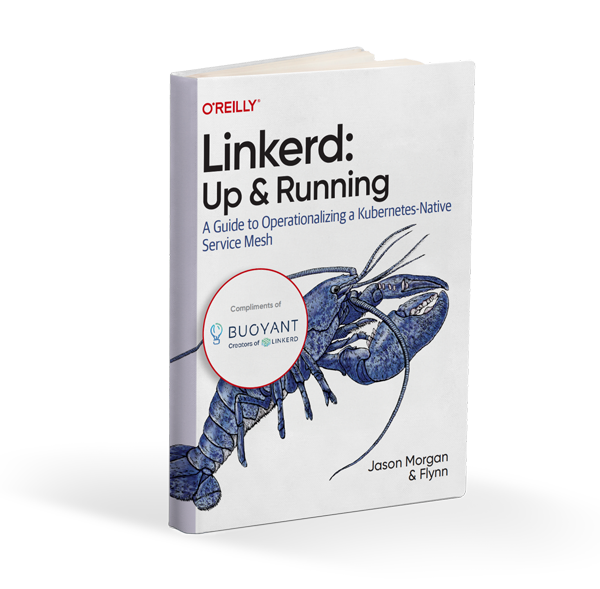
A practical guide to deploying, securing, and operating Linkerd in production, from the company that built it.
You've got microservices talking to each other across a Kubernetes cluster, and you need mTLS, retries, and real observability without rewriting every app. That's the job a service mesh does.
This O'Reilly book tells you how to run one, written by Buoyant, the team behind Linkerd. It's 262 pages of architecture, YAML, and the commands you'll run to get Linkerd from a laptop demo to a production cluster.
Who this is for
You'll get the most out of this if you know your way around Kubernetes, containers, and the command line. Familiarity with Prometheus, Helm, or Jaeger helps but isn't required.
Already running Linkerd? Skip to the chapters on policy, multicluster, or production readiness. New to service meshes? Start at chapter 1.
Free O'Reilly ebook
Linkerd claims the lowest time to value of any service mesh available today. Use this book to check our claim yourself.
What's inside
Every chapter maps to a job you'll need to accomplish in the order you'll need it.
- Service mesh 101. What a mesh does, what problems it solves, and when you don't need one.
- Linkerd architecture. How the control plane and data plane fit together, and why Linkerd's proxy is built the way it is.
- Deploying Linkerd and adding workloads to the mesh. Installing Linkerd and meshing your first application.
- Ingress and Linkerd. How Linkerd works with your ingress controller instead of fighting it.
- The Linkerd CLI. Using linkerd to inspect and control a live deployment.
- mTLS and X.509 certificates. How Linkerd secures every connection by default, and what that actually requires of you.
- Server-based policy and route-based policy. Turning mTLS identity into a real authorization strategy, at the pod and route level.
- Observability. Getting golden metrics (success rate, latency, request volume) out of your mesh without instrumenting every service.
- Reliability. Using retries, timeouts, and load balancing to make your application more resilient without touching application code.
- Multicluster communication. Extending a Linkerd mesh across more than one Kubernetes cluster.
- CNI versus init containers. The tradeoffs in how Linkerd hooks into your cluster's networking and which one fits your environment.
- Production-ready Linkerd. What changes when this stops being a proof of concept?
- Debugging Linkerd. What to check when the mesh itself is the thing misbehaving.